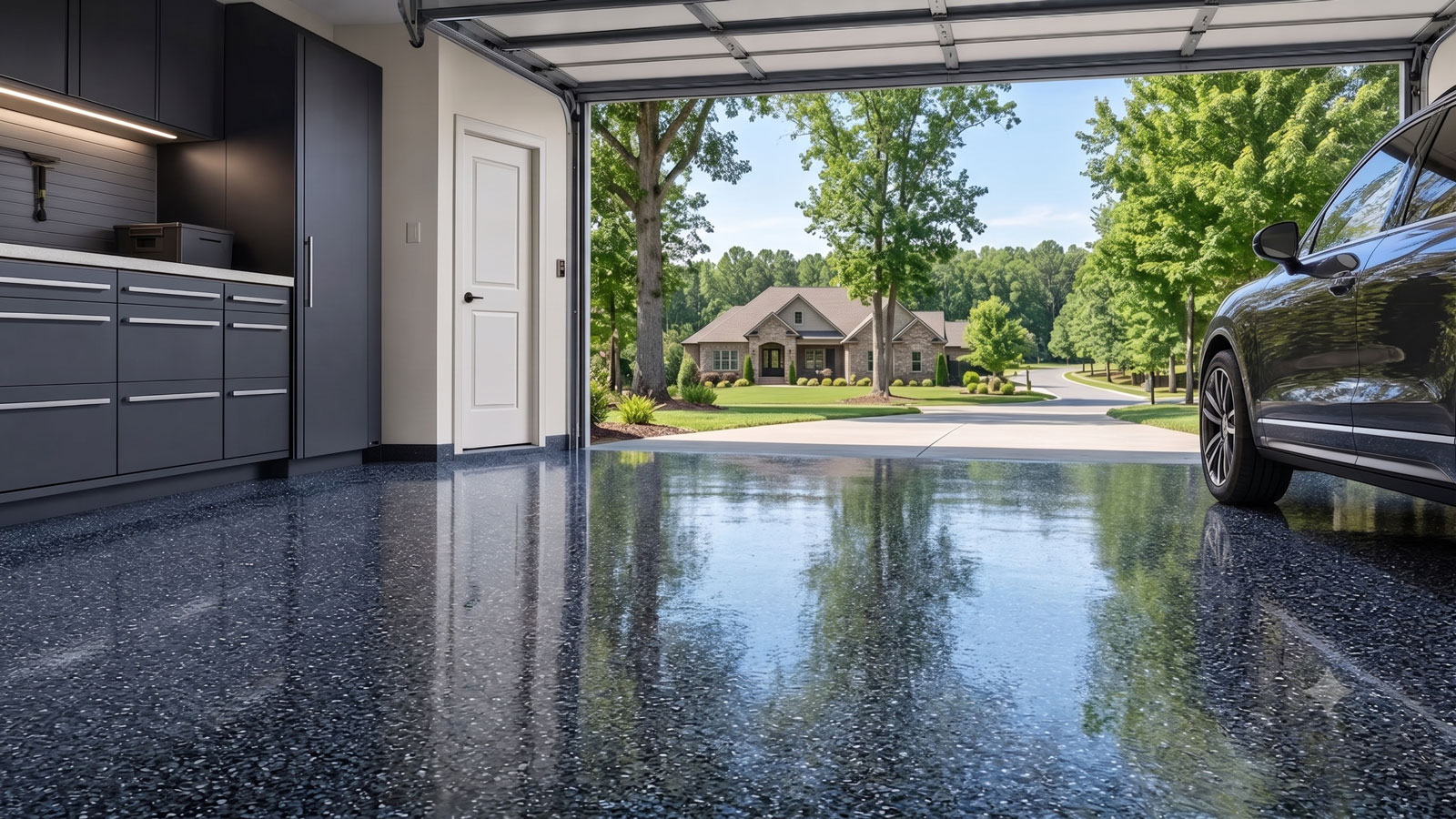
Garage Floor Coating in Los Angeles, CA
Floor Coating Services in Los Angeles, CA
Los Angeles is a difficult place to treat as one uniform garage market. The city stretches across flat basin neighborhoods, foothills, canyons, and the San Fernando Valley, and the age and condition of residential concrete can vary just as much. A garage in a postwar Valley tract may have a very different slab history from a newer hillside home or a property that has already seen paint, sealer, patching, or an earlier coating.
That age matters. About three-quarters of Los Angeles housing was built before 1980. Older concrete does not automatically mean bad concrete, but it does make inspection more important. Existing coatings, oil contamination, patch material, cracks, and old repairs should be identified before grinding begins so the new coating is bonding to sound concrete rather than to whatever happens to be on top of it.
The local climate adds another practical consideration. Los Angeles garages can spend long parts of the year warm and dry, and garage entrances often receive strong afternoon sun. That makes surface preparation, UV-stable topcoats, and realistic return-to-service timing more important than simply choosing a color and rolling on a coating.
Local Market Insight
Los Angeles projects are rarely “one-size-fits-all.” The useful first question is not the age of the house by itself, but what has happened to the slab since it was poured.
What Affects the Cost of Garage Floor Coating in Los Angeles?
Garage floor coating in Los Angeles typically runs $6–$12 per square foot, with a typical two-car garage around $3,000–$5,500. The final scope depends less on the ZIP code than on the concrete itself, access, repairs, previous finishes, and the coating system selected.
Existing paint, sealer, or coating
With so much older housing in Los Angeles, it is common to encounter concrete that has been painted, sealed, patched, or coated before. Removing a weak layer takes time, but leaving it in place can turn it into the failure point for the new system.
Cracks and prior repairs
A visible crack is not automatically a major problem, but it should be evaluated before coating. Old patch material may need to be removed and rebuilt if it is loose, uneven, or poorly bonded.
Hillside and sloped access
Some Los Angeles homes sit on steep streets or hillside lots. Equipment access, staging, parking, and moving grinders and vacuums into the garage can affect labor even when the floor itself is straightforward.
Sun exposure at the garage opening
A garage that faces strong afternoon sun puts more UV load on the area nearest the door. A UV-stable topcoat is especially useful where the front portion of the floor regularly sees direct sunlight.
Storage and garage use
Many Los Angeles garages work as storage, workshop, gym, parking, or a combination of all four. Moving shelving, cabinets, appliances, or accumulated storage can affect how quickly the coating work can begin.
Moisture and drainage
Even in a generally dry climate, water from winter storms, driveway runoff, irrigation, or washing can reach a garage. Threshold slope and drainage should be understood before coating so standing-water problems are not simply covered over.
Call for a clear, project-specific estimate — or request one online.
Local Garage-Floor Conditions in Los Angeles
Hot tires, oil, road grit, storage traffic, and direct sun at the door are more common concerns here than freeze-thaw or road salt. The concrete still needs mechanical preparation, and the system still needs to be matched to the slab rather than the weather alone.
Where a garage gets substantial sunlight, a UV-stable polyaspartic or comparable topcoat helps protect the appearance of the finish. Where the slab is older, crack and patch evaluation deserves extra attention. And where a driveway is steep, water direction at the threshold should be understood before the floor is coated.
The goal is not to make an old slab look perfect on paper. It is to prepare the concrete honestly, repair what actually needs repair, and build the coating system on a stable surface.
Older housing means varied slab histories
Los Angeles grew in several major waves, and the city’s housing stock reflects that. A garage floor in a 1940s or 1950s home may have decades of stains, patching, and repairs. A later tract home may have a cleaner original slab but still carry curing compounds or sealers. A remodeled property may have several generations of coatings on top of one another.
That is why a visual estimate is only the beginning. The floor should be checked for bond-breaking material, weak surface concrete, contamination, cracks, and previous coatings before the preparation plan is set.
Flat neighborhoods and hillside properties need different planning
Los Angeles includes large areas of conventional suburban lots as well as designated hillside neighborhoods where steep grades, retaining walls, narrow streets, and drainage shape the property. Those differences can affect equipment access and water movement even when the coating chemistry is the same.
A good estimate should therefore look beyond square footage. The route into the garage, the driveway slope, the threshold, drainage, and the way sun reaches the floor can all influence the project plan.
Homeowner Checklist
- Is there paint, sealer, or an old coating on the slab now?
- Are any cracks moving, wide, or previously patched?
- Does winter rain or driveway washing send water into the garage?
- Does direct afternoon sun reach the floor near the door?
- Will cabinets, appliances, storage racks, or a workshop need to be moved?
- Is equipment access difficult because of a steep or narrow driveway?
Los Angeles Garage Floor Coating FAQs
Does an older Los Angeles garage automatically need major concrete repair?
No. House age is a clue, not a diagnosis. Some older slabs are very sound. The important step is to inspect the actual concrete, previous repairs, cracks, and existing coatings before setting the preparation scope.
Is epoxy a bad choice because Los Angeles gets hot?
Not automatically. Epoxy can be an excellent base coat. For areas exposed to strong sunlight, a UV-stable topcoat is often the more important decision because it helps protect the finished surface from discoloration.
Can a coating fix water that runs into my garage?
A coating can make cleanup easier, but it does not correct poor drainage. If water regularly crosses the threshold or stands on the slab, the drainage issue should be understood first.
How long before I can put the garage back in service?
That depends on the exact system, temperature, and manufacturer requirements. Foot traffic usually returns before vehicle traffic. The installer should give you a clear timeline for your specific system rather than a generic promise.
Los Angeles Neighborhoods & Local Context
Phone Quote Line
Speak with a floor coating specialist about your project and get a realistic estimate range.
(747) 588-7577Typical Project Cost
$3,000–$5,500
Typical range for a two-car garage. Final pricing depends on floor size, concrete condition, prep work, coating type, and finish options.
Helpful Guides