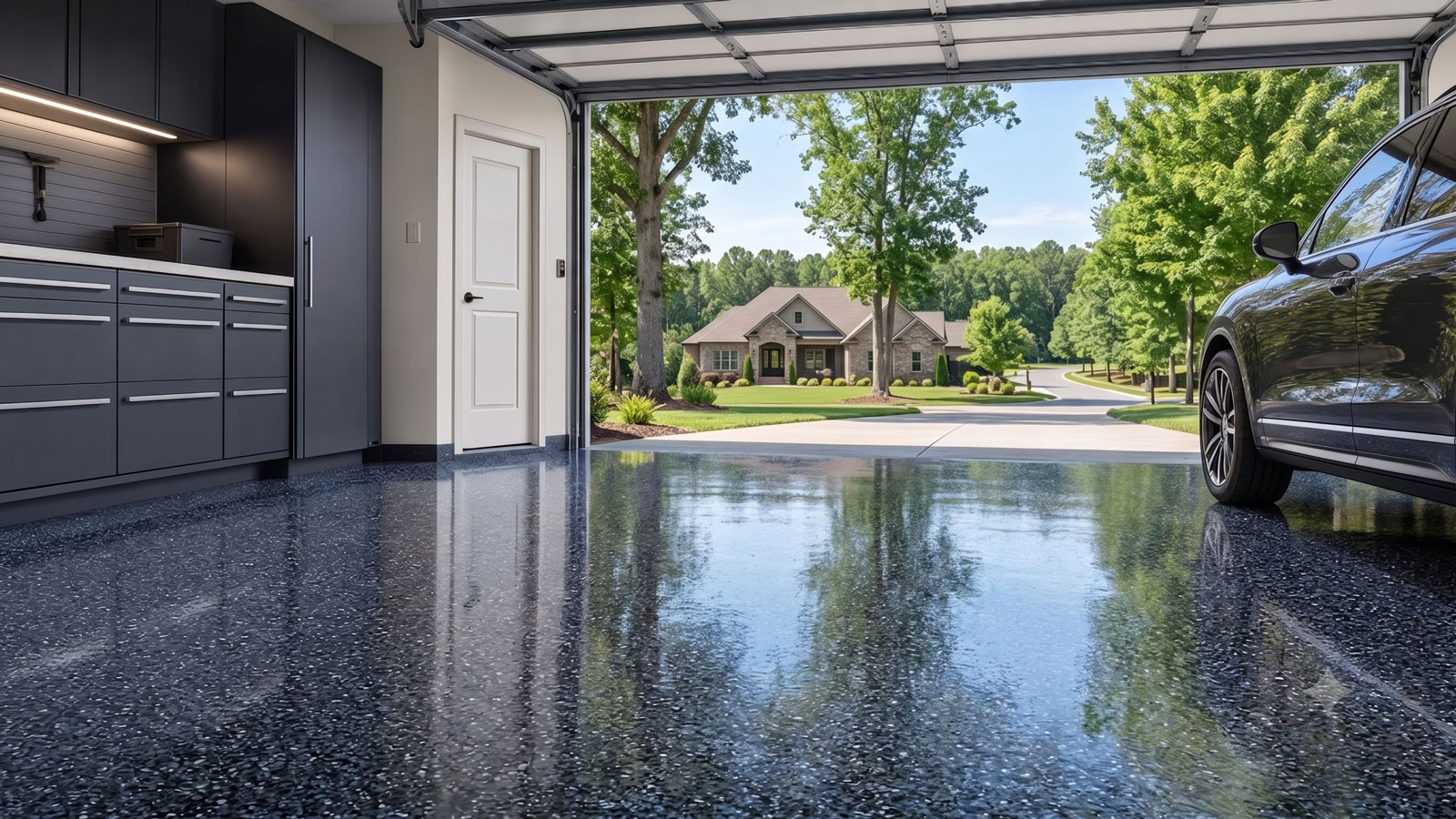
Garage Floor Coating in Sherman Oaks, CA
Floor Coating Services in Sherman Oaks, CA
Sherman Oaks combines established single-family neighborhoods, denser housing, major commercial corridors along Ventura and Sepulveda Boulevards, and hillside streets that climb toward the Santa Monica Mountains. That mix means garage projects can range from straightforward postwar suburban slabs to steep hillside properties where access and drainage deserve just as much attention as the coating itself.
Sherman Oaks combines single-family and multifamily neighborhoods, while much of its commercial activity is concentrated along Ventura and Sepulveda Boulevards. Move away from those corridors and the residential garage market becomes much more apparent. This is an established and mixed-use community, not a homogeneous tract of newly poured garage slabs. Los Angeles's updated Southeast Valley planning materials distinguish Sherman Oaks's single-family and multifamily residential neighborhoods from its Ventura and Sepulveda regional commercial center.
South of Ventura Boulevard, hillside streets and the Mulholland area introduce steeper grades, irregular lots, and more complicated driveways. Those conditions do not make coating difficult, but they make inspection and staging important. Los Angeles's Southeast Valley Community Plan identifies Sherman Oaks residential neighborhoods and the Ventura and Sepulveda commercial corridors. This combination of residential streets and active arterials is a meaningful local setting, but it cannot establish a garage's slab age or contamination.
Local Market Insight
Sherman Oaks has two garage-floor personalities: conventional Valley neighborhoods on flatter land and hillside homes where slope, drainage, and access can dominate the project plan.
What Affects the Cost of Garage Floor Coating in Sherman Oaks?
Sherman Oaks includes established residential neighborhoods and larger commercial corridors that reflect different concrete uses. A household garage with peeling paint and one used for equipment storage should not be quoted as identical. Look for explicit removal work, oil preparation, crack repair, layout details and product-specific application timing. Existing finishes, hillside access, crack repair, garage size, and threshold drainage are the local factors most likely to affect scope.
Hillside grading and access
Steep properties can require more equipment handling and careful staging.
Driveway drainage
A sloped driveway can direct winter rain toward the garage if drainage is poor.
Older slab surface history
Established Sherman Oaks homes may have decades of paint, sealers, oil, and patching.
Larger garages
Higher-value hillside properties may have oversized or multi-bay garages, increasing both material quantity and preparation time.
Direct sun
Open hillside exposures can put strong UV load on the front of the floor.
Storage and built-ins
Cabinetry, shelving, appliances, and workshop equipment may need to be moved or worked around before preparation begins.
Call for a clear, project-specific estimate — or request one online.
Ventura Boulevard does not define the whole market
Ventura and Sepulveda are the visible commercial spine of Sherman Oaks, but extensive single-family residential areas spread around them. The garage-floor opportunity is in those quieter residential streets rather than the commercial corridor itself.
That distinction matters for local content because a Sherman Oaks homeowner is more likely to care about slab condition, driveway slope, storage, and sun exposure than about generic “Los Angeles traffic” language.
For most Sherman Oaks garages, the coating fundamentals are straightforward: mechanically prepare the slab, repair defects that matter, remove weak existing finishes, and use a durable topcoat.
The local difference is the property. Flat lots are usually easier to stage. Hillside lots need a closer look at access, slope, drainage, and sunlight.
For a Sherman Oaks garage, visible oil staining, previous coatings, cracks and the geometry of the entry should drive the preparation plan. If a driveway directs rain toward the floor, solve that condition separately; a decorative system is not drainage or flood protection.
A residential garage may contain old paint or repairs while a working garage may have oil or rubber residue. These are possible inspection findings, not attributes of every Sherman Oaks property. Ask what concrete removal or treatment is included in the proposal and what happens if damaged concrete is uncovered.
The community sits between the Valley floor and south-facing hillside approaches. If a driveway slopes toward the overhead door, inspect actual storm behavior. A coating will not fix exterior water entry, and a municipal rain or flood map cannot establish vapor beneath an individual slab.
Hillside homes require property-specific planning
Sherman Oaks hillside properties regularly involve steep streets, grading, retaining conditions, and single-family construction. Those same physical conditions show up at the garage door.
A steep approach can complicate equipment staging. A retaining wall may influence drainage. A narrow street can limit where the crew parks. None of those conditions should be guessed from square footage alone.
A homeowner should expect the estimate to account for those conditions rather than simply multiplying square footage by a rate.
Southern California summer sun can heat the first feet of garage concrete differently from the shaded back wall. That can matter for substrate temperature, application method and cure timing. The contractor should specify the complete layered system, not just an epoxy or polyaspartic product name.
For an older Sherman Oaks property with a small attached garage, there may be more edge work than the floor's footprint suggests. A multi-bay or storage-heavy space presents different access and staging. Have each quote describe thresholds, edges and immovable equipment separately, so comparison does not rely on a generic square-foot figure.
Homeowner Checklist
- Is the property north or south of Ventura Boulevard?
- Is the garage on a hillside or steep driveway?
- Where does rainwater move during a storm?
- Is there an old coating or sealer?
- Is the garage oversized or multi-bay?
- Does direct sun reach the floor near the door?
Sherman Oaks Garage Floor Coating FAQs
Are Sherman Oaks hillside garages more expensive to coat?
Not automatically. They can require more labor if access, staging, or drainage conditions are difficult, but the slab itself may still be straightforward.
Does a high-value home require a different coating chemistry?
No. System choice should follow the concrete condition, use, exposure, and finish preference—not the home’s price.
Should I repair every crack before coating?
Cracks should be evaluated, but not every hairline crack needs the same repair. The installer should distinguish cosmetic shrinkage from defects that require more substantial treatment.
Is polyaspartic better than epoxy in Sherman Oaks?
They serve different roles well. Epoxy can be an excellent base coat; polyaspartic is often valuable as a durable, UV-stable topcoat, especially where sunlight reaches the floor.
Should a Sherman Oaks garage used for equipment be priced like parking only?
Not necessarily. Workshop oils, shelves, storage and repeated traffic can change cleaning, grinding and finish requirements. Ask what contamination and edges were actually observed and how vehicle-return timing is handled.
Sherman Oaks Neighborhoods & Local Context
Phone Quote Line
Speak with a floor coating specialist about your project and get a realistic estimate range.
(747) 588-7577Typical Project Cost
$3,000–$5,500
Typical range for a two-car garage. Final pricing depends on floor size, concrete condition, prep work, coating type, and finish options.
Helpful Guides