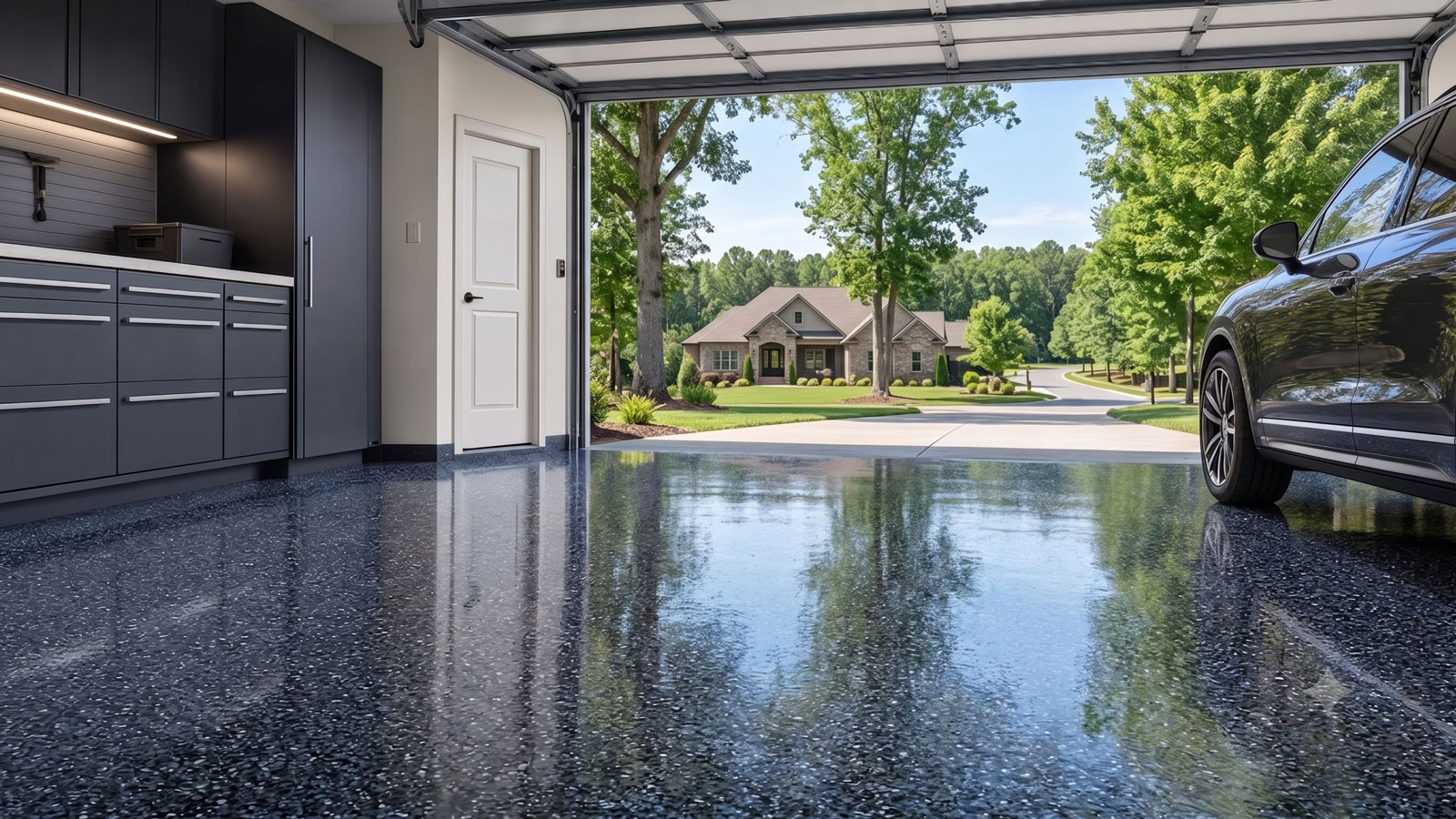
Garage Floor Coating in Northridge, CA
Floor Coating Services in Northridge, CA
Northridge has some of the most recognizable postwar suburban housing in the San Fernando Valley, including concentrations of Ranch houses built during the 1940s through 1970s on larger lots with lush landscaping and wide, curving residential streets. Its residential setting includes established suburban garages, schools and commercial corridors, with different concrete histories and uses within a single planning boundary.
That is useful garage-floor territory because many of these homes were designed around automobile access and long-term residential use. The concrete may be decades old, but the garage itself is often a central part of the property rather than an afterthought. Northridge is a distinct Los Angeles community-plan area rather than part of the Chatsworth–Porter Ranch foothill plan or the Encino–Tarzana area.
Northridge is not entirely flat. Northridge also includes hillside pockets between White Oak Avenue and Bull Creek and between Devonshire Street and Nordhoff Street, where drainage, topography, and geology become more important. Northridge has its own Los Angeles community-plan area, reflecting a different land-use context from the hillside Chatsworth–Porter Ranch and valley-edge Granada Hills plans. A particular home's garage might have older paint or a modern sealer regardless of the neighborhood's wider development history.
Local Market Insight
Northridge’s postwar Ranch neighborhoods are almost a textbook garage market: established single-family homes, larger lots, broad residential streets, and decades of vehicle use.
What Affects the Cost of Garage Floor Coating in Northridge?
Northridge has established residential streets and individual garage surfaces that may have been repoured, painted, sealed or repaired. A contractor should assess the real floor, not assume old concrete from the house date. Removal of incompatible finish, joint treatment, access around shelving and sun-exposed edges explain meaningful cost variation. Older slab surfaces, previous coatings, crack repair, larger garage size, and hillside access are the main local variables.
Postwar concrete
Many Northridge residential areas date to the Ranch-house building boom. The slab may be sound but still carry decades of repairs, oil, paint, or sealer.
Larger lots and garages
Some custom Ranch neighborhoods were built on substantial lots, and larger garages naturally increase preparation and material quantities.
Previous coatings
DIY paint and older garage-floor systems must be evaluated and removed when they are not well bonded.
Crack repair
Older slabs can show shrinkage cracking or previous patching that needs attention before coating.
Landscaping debris
Lush landscaping and mature trees can bring leaves, dust, and soil into the garage. Full-flake finishes are practical for hiding normal everyday debris between cleanings.
Hillside pockets
Where the property enters Northridge’s hillside areas, driveway slope, drainage, and equipment access deserve a closer look.
Call for a clear, project-specific estimate — or request one online.
Ranch-house neighborhoods and garage use
Ranch houses are a dominant residential form in many of Northridge’s postwar subdivisions. Many neighborhoods have broad streets, deep setbacks, large lots, and mature landscaping.
That development pattern supports frequent garage use for vehicles, storage, hobbies, and workshop space. When the slab is prepared correctly, an older garage can be an excellent candidate for a modern coating.
Northridge’s warm summers and strong sun make a UV-stable wear coat useful near exposed garage doors. Freeze-thaw and road salt are not the routine design drivers here.
The bigger technical questions are surface age, previous finishes, cracks, and contamination. Older slabs should be mechanically profiled to sound concrete rather than lightly etched or coated over.
Summer heat can raise surface temperature at the entry, while interior concrete remains shaded. Ask the contractor to identify the material system's actual application window and cure conditions, inspect cracking and explain what happens if existing coatings are incompatible.
An existing garage floor might be bare, painted, repaired or previously coated. A home built in one era could have a garage slab poured later. The installer must assess surface soundness, joints, oil staining and incompatible layers rather than deciding preparation from a housing-age generalization.
The Valley's hot summers create practical scheduling constraints even without coastal salt exposure. A sunlit threshold can exceed the temperature of shaded floor farther inside. Product-specific substrate limits and a clear return-to-parking schedule belong in a written scope.
Not every Northridge lot is flat
Northridge includes designated hillside areas where drainage, steepness, geology, and grading become more important. A homeowner near those areas should not assume the project logistics will be the same as a flat Valley-floor garage.
Driveway grade and water direction at the threshold are worth checking during the estimate.
If the garage is also a workshop, traction and chemical resistance may deserve more attention than a high-gloss showroom finish.
Northridge homeowners using garages as family entries may want texture when rainwater is carried indoors. Another owner using a workspace may care more about cleanup around equipment or oil. A complete proposal identifies preparation, cracks, coatings, topcoat, edge work and maintenance expectations.
Northridge planning identity establishes a neighborhood, not the condition of a concrete slab. If the estimator proposes substantial crack work or moisture treatment, ask for the actual observed basis and whether further evaluation is needed. A useful estimate differentiates surface grinding, repairs, old paint removal, edges, base layers and topcoat so any added work is transparent.
For a Northridge garage, ask for a written proposal that explains which findings were actually seen during inspection, rather than assuming a residential address establishes concrete condition. The agreement should state surface preparation and expected parking downtime.
Homeowner Checklist
- Is the home part of a postwar Ranch neighborhood?
- Is the garage used for vehicles, storage, or workshop activity?
- Is there existing paint or sealer?
- Are there oil-darkened areas or old repairs?
- Does mature landscaping track debris into the garage?
- Is the property near a hillside or sloped area?
Northridge Garage Floor Coating FAQs
Does a 1950s or 1960s Northridge garage need replacement concrete before coating?
Usually not. Age alone does not determine suitability. The concrete should be inspected for strength, contamination, cracks, and previous finishes.
What finish works well in a busy family garage?
A decorative full-flake system is popular because it is durable, easy to clean, and visually forgiving of normal dust and small debris.
Are cracks common enough to expect repairs?
Older concrete often has some cracking, but the severity varies. Repair needs should be based on the actual crack, not the age of the neighborhood.
Does summer heat prevent installation?
No. Installers simply need to work within the product’s temperature and cure requirements and plan the schedule around actual site conditions.
Can old painted concrete in Northridge still be coated?
Possibly. Age or paint alone does not mean replacement is needed. The installer should test soundness, evaluate cracks and old coatings and describe removal or mechanical preparation before applying a new finish.
Northridge Neighborhoods & Local Context
Phone Quote Line
Speak with a floor coating specialist about your project and get a realistic estimate range.
(747) 588-7577Typical Project Cost
$3,000–$5,500
Typical range for a two-car garage. Final pricing depends on floor size, concrete condition, prep work, coating type, and finish options.
Helpful Guides